Systems Thinking In Space
Thinking in Systems for The Human Off-World Future Among the Stars


Humanity is preparing to become an off-world species. We are building rockets and robots, infrastructure and missions, and speculative plans for life beyond Earth.
We have a lot of questions to answer first: from the material to the pragmatic to the esoteric. But the question is not only whether we can go to space, but how we bring our humanity to space.
Humanity In Space
Space is not an empty frontier waiting for human ambition. It is a vast field of interdependent systems: planetary atmospheres, orbital debris, radiation environments. It’s communication networks, resource flows, and machine intelligences. Closed-loop habitats, biological fragility, political economies, ethical obligations, and unknown forms of life or intelligence we may not yet even understand how to recognize yet.
To prepare for humanity’s off-world future among the stars, we need more than engineering.
We need Systems Thinking. On a grand, societal, pedagogical scale.
Systems thinking is a way of understanding problems by looking at relationships, patterns, feedback loops, boundaries, and consequences rather than treating things as isolated parts. Its modern roots are usually traced to mid-20th-century systems theory and cybernetics, especially Ludwig von Bertalanffy’s General Systems Theory and Norbert Wiener’s work on feedback and self-regulating systems. It later developed through fields like ecology, organizational learning, design, and system dynamics, including Jay Forrester’s work at MIT and Donella Meadows’s influential writing on systems and leverage points. At its simplest, systems thinking asks: how do the parts interact, what patterns do those interactions create, and what happens when one part of the system changes?
Systems thinking asks us to understand the world not as isolated objects, but as relationships, and allows us to identify patterns, feedback loops, delays, dependencies, constraints, and unintended consequences.
Systems thinking also asks what happens when one part of a system changes, and how that change ripples across the whole.
There is no industry or sector where systems thinking is not useful and beneficial, extending beyond Earth, to our extra-terrestrial environs.

Popular visions and public imaginings of space aren’t quite right. They imagine space as escape: escape from Earth, from climate crisis, from politics, from scarcity, from human conflict, from ecological and legal limits. But this isn’t accurate. Off-world, a habitat is not just a structure. It is an ecological, technological, social, psychological, and political system. A spacecraft is not just a vehicle. It is a life-support system, a communication system, a home, and a fragile trace of the human world – all enclosed in metal and polymers.

Systems thinking reveals the impossibility of escape. Wherever we go, from the sea floor to the lunar landing, we bring our systems with us.
No matter what moonbase or planet we are on, we will bring our social structures, our assumptions, our inequalities, our myths, our habits, and our foibles. We will carry with us the human tendency to mistake technical achievement for ethical maturity.
Space Humanities
I have a poetry installation on Earth’s moon, and I co-develop and lead workshops on Exoplanetary Humanities with Bart Kuipers, a SETI Institute Artist-In-Residence. My work develops methods around space humanities and relational futures, and looks at the Humanities as the training ground for the durable skills and transversal competencies needed in space exploration. Bart’s work develops speculative tools for communicating with nonhuman life on exoplanets. Right now, he’s working on a project around poetry for aliens (exoplanetary intelligences). We are both artist-technologists, who want to invite more people into thinking about humanity’s off-world futures.
In July we will be leading Out Of This World: An Exoplanetary Poetry Workshop, as part of the Electronic Literature Organization conference.
The workshop helps people practice thinking in systems at the edge of the imaginable.
People need a practice space for thinking beyond the human without immediately turning that into abstraction, fantasy, or technical design. We wanted to create a space to help participants rehearse the mental, ethical, and imaginative skills needed for off-world futures. We do this by using poetry and storytelling as a low-barrier, high-complexity method. Participants do not need to be astrobiologists, engineers, or science fiction experts to enter the question. Questions like:
What counts as intelligence if it does not resemble human cognition?
What counts as communication if the intelligence does not use language?
How does a human navigate world (real worlds) that rain diamonds, or are tidally locked?
How do we approach the unknown without immediately colonizing it with our categories?
The workshop gives participants a way to practice the kinds of thinking off-world futures will require: systems thinking, interpretive humility, and comfort with uncertainty.

Through creative exploration, participants rehearse how to address what may not answer, how to listen for what may not sound like language, and how to imagine intelligence without simply projecting the human onto the unknown.
In this sense, the workshop is not really about writing poems for aliens, though it may begin there. It is about training perception. We ask participants to notice the systems they are already inside — language, metaphor, technology, ecology, power — and to consider how those systems shape what they are able to recognize as life, meaning, or response.

The Humanities are the ground for the non-technical skills needed in space.
Durable skills are the human capacities that remain valuable across changing technologies, industries, environments, and crises: critical thinking, communication, ethical judgment, collaboration, creativity, interpretation, adaptability, systems thinking, and the ability to make meaning under conditions of uncertainty. Transversal competencies are closely related: they are skills that travel across domains, allowing people to move between disciplines, cultures, tools, and contexts. The humanities train these capacities directly. Reading, writing, interpretation, historical analysis, artistic practice, philosophy, rhetoric, and cultural study teach people to recognize patterns, examine assumptions, understand complexity, communicate across difference, and ask better questions.
For humanity’s off-world future, these are not “soft” skills; they are survival skills.
Systems Thinking & Our Off-World Future
Space will require people who can think relationally, ethically, and imaginatively across technical, ecological, political, social, and existential systems.

On Earth, we can pretend systems are separate. Food is over here. Waste is over there. Politics is somewhere else. Climate, labor, health, technology, infrastructure, culture, law, and ethics all get divided into different departments, fields, budgets, and crises.
But off-world, that illusion collapses.
A moonbase, spacecraft, or orbital station, or Mars habitat is not just a place.
It is a tightly coupled system where air, water, food, waste, energy, tools, microbes, bodies, emotions, governance, and communication all depend on one another. If one part fails, the whole system is affected. A water problem becomes a health problem. A governance problem becomes a survival problem. A team member’s psychological problem becomes an operational problem. A design flaw becomes an ethical crisis.
This is true on Earth, too. But within the context of space, this becomes amplified.

And while our off-world future will certainly be led by science and technology, the humanities are also needed to prepare us for a future among the stars.
The future of space is not only about where humans can go. If we are going to live among the stars, we will need to think like systems thinkers. We will need to understand that every habitat is an ecology, every technology carries values, every mission has a politics, every form of contact has an ethics, and every future is built from relationships.
The challenge before us is not only to become a spacefaring species.
The challenge is to become a species capable of thinking systemically and relationally at cosmic scale. If we are going to live among the stars, we must learn to see interdependencies much clearer, and think like humans are part of and belong to something much vaster, larger, expansive than ourselves. Because we already do.
To join July’s workshop, register for the ELO conference here: https://stars.library.ucf.edu/elo2026/ or to bring tho workshop to your organization, please reach out here.
Further Reading:
Becoming Aliens: Towards a Universal Language for Extra-Terrestrial Communication
https://thinkpieces-review.co.uk/2025/11/19/becoming-aliens/
SETI: Exoplanetary Poetry: AI, Chemistry, and Alien Communication
https://www.seti.org/news/exoplanetary-poetry/
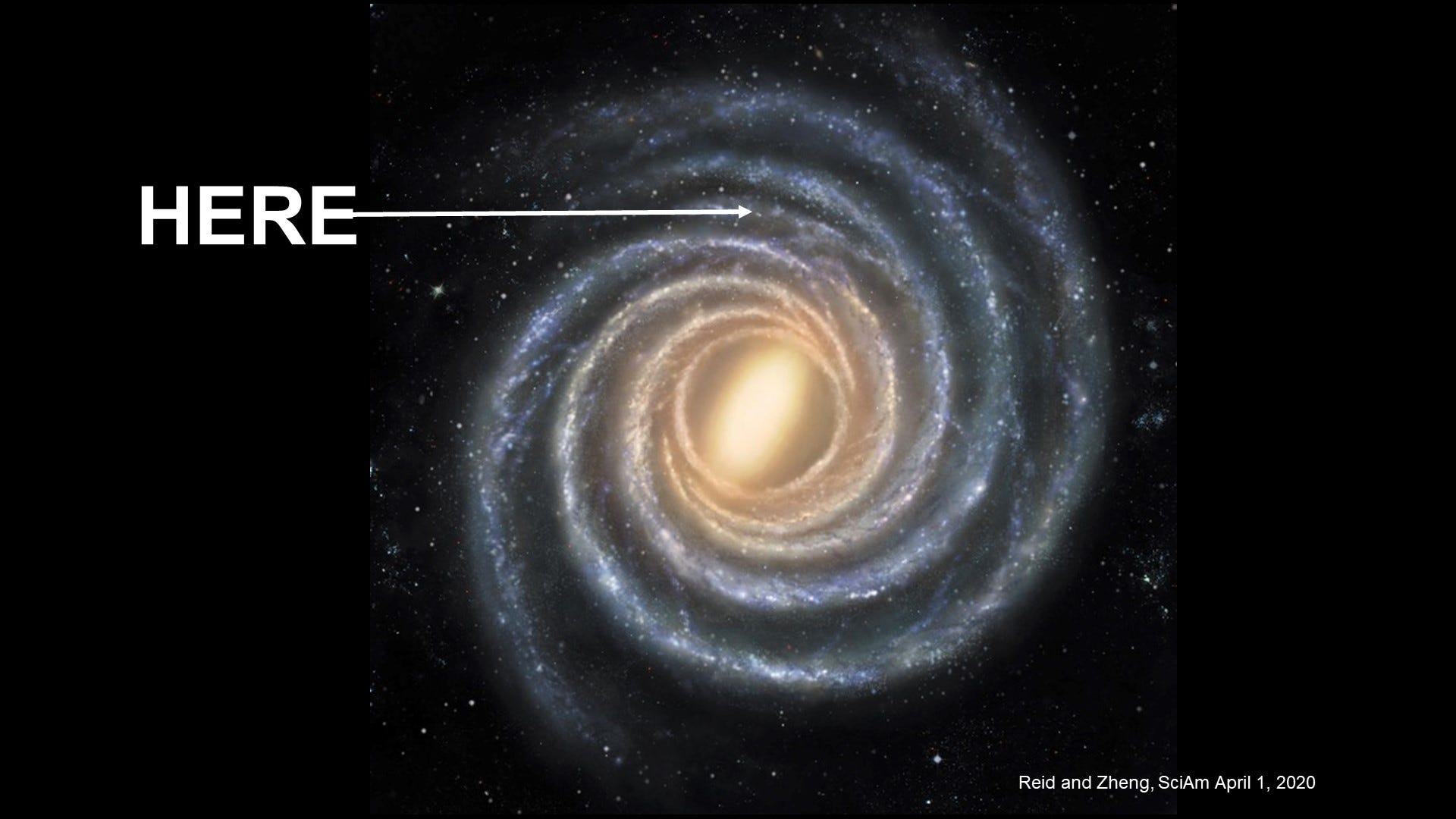
SETI Institute: Here & Now (A pictographic representation of where we are situated in the universe. Highly entertaining and informative.)
https://apod.nasa.gov/debate/2020/Tarter100th.html